

Modern railway and metro stations often feature wide, open entrances exposed directly to outdoor conditions. In hot and humid climates, these openings allow warm and moist air to flow into the station, increasing cooling demand and reducing passenger comfort.
Air curtains help limit this uncontrolled air infiltration by creating an invisible, high‑velocity barrier that stabilizes the indoor climate near the entrance.
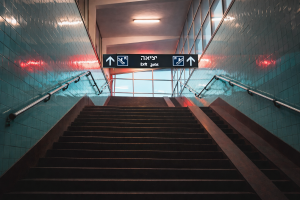
Entrance Characteristics and Climate Conditions
Transit‑station entrances typically include wide openings, high ceilings, heavy passenger flow, and direct connection to cooler underground spaces.
In summer months, outdoor temperatures can reach around 35°C with humidity levels of 60–75%, while indoor conditions are usually maintained at approximately 25°C with moderate humidity. This contrast naturally drives warm, humid air into the station.
How Air Curtains Work
Without any separation, outdoor air enters due to temperature differences, pressure variations, wind, and continuous passenger movement.
An air curtain creates a controlled vertical air stream across the entrance, significantly reducing the amount of air that crosses between the exterior and interior — without blocking pedestrian flow.
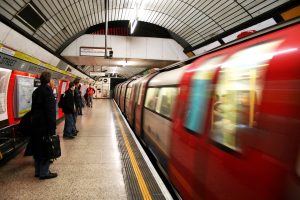
Typical Air Curtain Performance
Based on industry studies and field measurements, properly installed air curtains can reduce infiltration by about 60%–70%, depending on:
- Installation height
- Jet velocity and direction
- Entrance geometry
- Passenger traffic
- External wind exposure
Impact on Cooling Load
In large, open transit entrances, the cooling demand for the entrance zone alone can reach 20–40 kW, and often higher in busy stations.
In hot and humid climates, moisture infiltration is a major factor in overall cooling load.
Energy Savings – The Bottom Line
In real-world conditions, air curtains typically provide net energy savings of about 6%–25% depending on entrance size, original infiltration rate, and humidity levels.
In large, always-open stations, savings can be even higher.
Even when electrical savings are moderate, air curtains significantly stabilize conditions and reduce peak HVAC loads.
Additional Operational Benefits
Beyond energy performance, air curtains offer clear advantages:
- Improved comfort near the entrance
- Lower peak loads on HVAC systems
- Improved system stability with reduced load on the HVAC equipment
- Better humidity control, helping prevent condensation in underground zones

Air curtains offer a practical and effective solution for open entrances in busy transit stations. They limit heat and moisture infiltration, reduce the burden on cooling systems, improve comfort, and enhance overall operational efficiency.
When installed correctly, they become a key component in managing climate conditions and optimizing energy use in transportation facilities.